How to Turn Closings Into Referrals
The referral ask almost always comes too late, and usually arrives bundled with a review request that competes with it.
Those are two different asks and they belong at two different moments. Get the order wrong and you get neither. That is why most loan officers fail to turn closings into referrals.
Why Loan Officers Fail to Turn Closings Into Referrals
Two reasons, neither of them laziness.
The file closes and you move to the next one, which has a deadline. A past client does not.
The second is worse. Most post closing follow up for loan officers puts both asks in one message. The client does neither.
An after closing follow up plan has to separate them.
Working people you already closed beats buying new names. Database marketing for loan officers covers why. Our post on why the book beats a vendor list makes the same case on cost.
A Review and a Referral Are Not the Same Ask
One takes sixty seconds on a phone. The other means thinking of a specific person and handing over their name.
| The review ask | The referral ask | |
|---|---|---|
| What it does | Builds credibility others can see | Produces business now |
| Client effort | Low, a link and a sentence | High, social risk |
| Best timing | Closing day, once the win is finalized | Mid-process, at a milestone |
| The pitch | Help other buyers find me | Help your friends get this |
Ask for both at once and the request reads as too demanding. Separate them, and the order is not the one most people use.
Plant the Referral Seed Mid-Process
The referral ask belongs before closing.
A borrower who has just cleared pre-approval or an appraisal is in real estate mode. They are talking to colleagues, family and their agent about it. Knowing someone else looking is a live thought, not a memory.
Tie it to the milestone. “I’m thrilled we got this hurdle cleared. Most of my business comes from helping people like you. If you hear of anyone looking to buy or refinance this season, send them my way.”
By closing day that conversation has stopped. They are relieved, they are moving house, and they are done talking about mortgages.
Lock In the Review at Closing
Once the loan funds and the keys are handed over, switch to the review.
This is when a digital ask works. They feel finished, they are on their phone, and it costs a minute.
Send a direct clickable link to Google or Zillow. Not a request to leave a review. The link.
Every step between the ask and the form costs reviews. Someone who has to search for your profile will not bother.
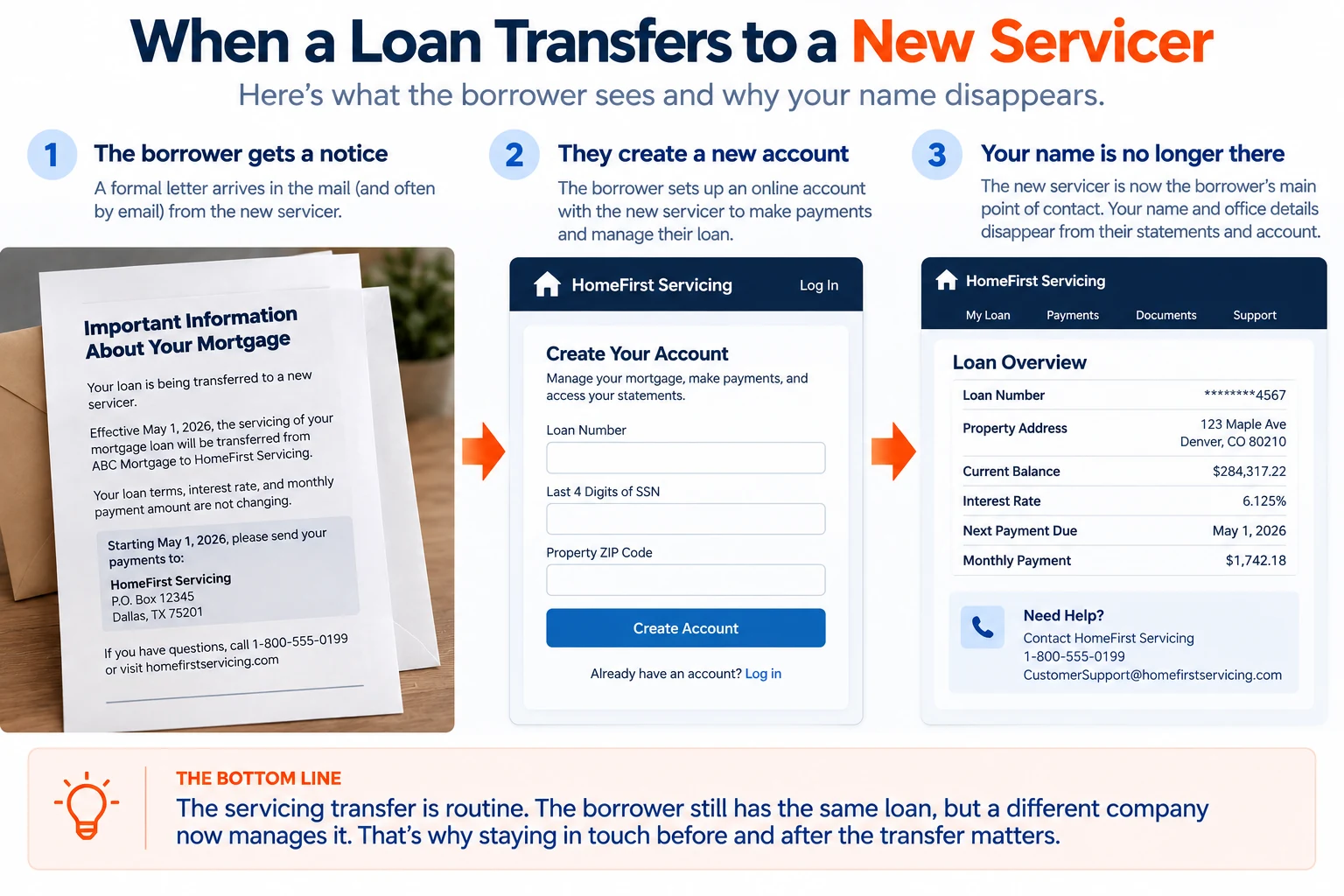
Day 30 to 60, the Servicing Transfer
Most borrowers do not know their loan can be sold. The notice arrives. A company they have never heard of starts taking the payment. The loan stops being yours in their mind.
Get ahead of it. Tell them it may happen. Tell them it changes nothing about their terms, and that you are still the person to call.
That message costs a paragraph and keeps your name on a loan you no longer touch. No other page on this subject covers it.
Day 60 to 90, Ask Again and Narrower
Go narrower the second time. “Do you know anyone else looking this spring” beats “keep me in mind.” If they mentioned a colleague relocating, ask about the colleague.
Offer something worth referring you for. An annual review, or an equity conversation if the file supports it. Our post on when a HELOC conversation is the right one covers that timing.
A closing date is a trigger, and mortgage lead management software should fire on it. A sequence living in a personal reminder stops in the first busy month.
Handling post close client touchpoints well is a real buying criterion. How mortgage CRMs stack up compares platforms on it.
What Not to Send
A closing gift instead of a conversation. The gift is fine, but it is not a touchpoint.
Both asks in one message. That is the mistake this whole page is about.
A newsletter in the first month.
Frequently Asked Questions
When should you ask a past client for a referral?+
Before closing, at a milestone like a cleared pre-approval or appraisal. That is when they are actively talking to colleagues and their agent about the process. By closing day that conversation has stopped. Ask again around day 60 to 90, narrower.
Should you ask for a review and a referral at the same time?+
No. A review is a sixty-second digital task and a referral means naming someone you know. Asking for both at once makes the request feel too demanding and usually produces neither. Separate them, and put the review at closing where the low-effort ask belongs.
Why does the servicing transfer matter to a loan officer?+
Because it is the moment the loan stops feeling like yours. A company they have not heard of starts taking the payment. Telling them in advance keeps your name on a loan you no longer service.